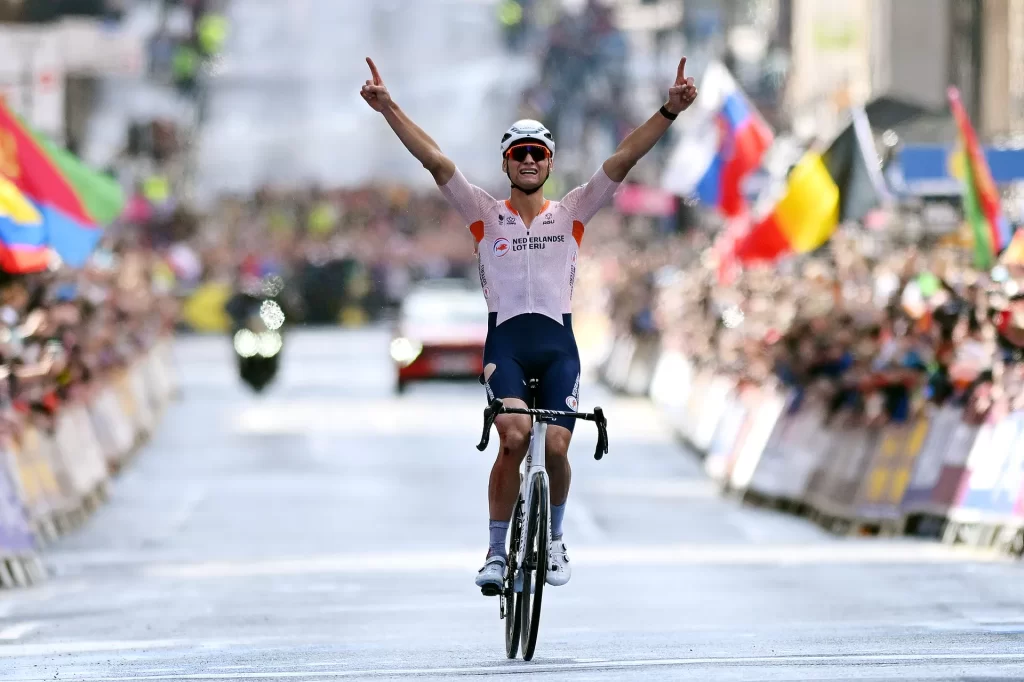
Sean Kelly: The All-Terrain King of the 1980s
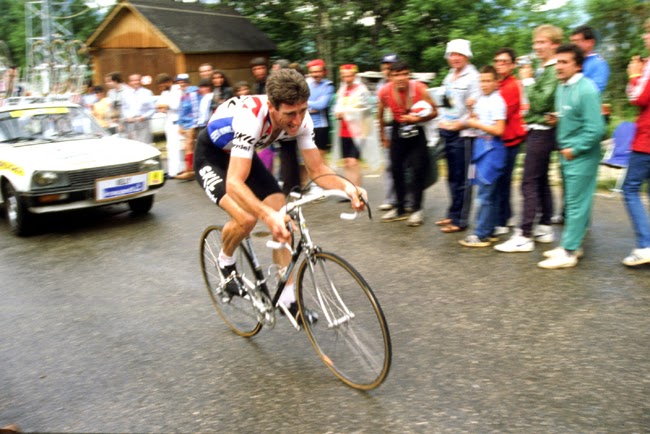
Some riders are remembered for a single Tour de France, a single Classic, or a single golden season. Sean Kelly is remembered for something rarer: range. He could out-sprint the fast men, outlast the hard men, time-trial with the specialists, and survive the kind of brutal Classics weather that turns legends into DNFs.
Born in Waterford, Ireland (24 May 1956), Kelly raced professionally from the late 1970s through 1994, becoming one of the defining one-day and stage-race forces of the 1980s. (Wikipedia)
A career built on versatility (and relentless consistency)
Kelly’s palmarès is the kind that forces you to stop and do the math twice:
- 9 Monument victories (and he nearly completed the full set) (Wikipedia)
- Record 7 consecutive overall wins at Paris–Nice (1982–1988) (Wikipedia)
- Winner of the 1988 Vuelta a España (Wikipedia)
- Four Tour de France points classifications (green jerseys): 1982, 1983, 1985, 1989 (Wikipedia)
- First-ever UCI Road World Cup champion (1989) (Wikipedia)
Even the “how many wins?” debate shows how deep the résumé is. ProCyclingStats lists 159 career victories in its victories database, while Wikipedia notes 193 professional race wins across the full span and broader counting. Different sources often count slightly different categories of events, stages, and historical records—but either way, the takeaway is the same: Kelly won a lot, for a long time. (ProCyclingStats)
The Monument hunter: 9 wins, four different Monuments
The five Monuments are cycling’s most prestigious one-day races. Winning one makes a career. Winning nine makes a legacy. (Cyclingnews)
Kelly’s Monument wins break down like this:
Milan–San Remo (2)
- 1986
- 1992 (Wikipedia)
San Remo is the “sprinters’ Monument”… except it’s rarely a simple sprint. Kelly could endure the distance, survive the late attacks, and still finish with speed.
Paris–Roubaix (2)
- 1984
- 1986 (Wikipedia)
Roubaix is where positioning, toughness, and bike handling count as much as power. Kelly didn’t just survive it—he mastered it.
Liège–Bastogne–Liège (2)
- 1984
- 1989 (Wikipedia)
Liège is often a climbers’ Classic. Kelly winning here—twice—captures his “all roads” identity: hard climbs, relentless pace, and tactical timing.
Il Lombardia (3)
- 1983
- 1985
- 1991 (Wikipedia)
Three Lombardias across nearly a decade is pure class. Lombardia rewards riders who can handle repeated climbs late in the season—Kelly had the endurance and the punch.
The one that got away: Tour of Flanders
Kelly is famous for having three 2nd places in the only Monument he never won: the Tour of Flanders. (Wikipedia)
That “almost” is part of the myth: he was close enough to win all five, yet history left him just short of the full collection.
Paris–Nice: seven straight overall victories (1982–1988)
If you want one statistic that screams dominance, it’s this:
Paris–Nice overall wins: 1982, 1983, 1984, 1985, 1986, 1987, 1988 — seven in a row. (Wikipedia)
Stage racing is usually where specialists trade turns: climbers, time trialists, sprinters, each grabbing their chances. Kelly basically told that rule to sit down.
Paris–Nice often includes time trials, tricky weather, crosswinds, and punchy climbs—exactly the kind of mixed profile where a complete rider can repeatedly win. Kelly didn’t just win overall; he frequently took stages along the way (including time trials), underlining that these weren’t defensive GC rides—he was actively racing to win. (Wikipedia)
Grand Tour success: the 1988 Vuelta a España
Kelly is sometimes labeled a “Classics rider,” but that undersells him. In 1988, he won the Vuelta a España overall, proving he could control a three-week race too. (Wikipedia)
That victory sits at the center of his stage-race peak, alongside his Paris–Nice streak and major one-week wins.
The Green Jersey years: Tour de France points dominance
Kelly won the Tour de France points classification four times:
- 1982
- 1983
- 1985
- 1989 (Wikipedia)
This matters because the green jersey isn’t “just sprinting.” It rewards consistency—placing well day after day, surviving climbs inside time limits, contesting intermediate sprints, and staying healthy through the whole Tour.
Kelly also won the intermediate sprints classification multiple times (including 1982, 1983, 1989), showing how methodical and complete his points-game strategy was. (Wikipedia)
Stage-race and one-week power: beyond Paris–Nice
Kelly’s major stage-race wins include:
- Tour de Suisse (1983, 1990) (Wikipedia)
- Tour of the Basque Country (1984, 1986, 1987) (Wikipedia)
- Volta a Catalunya (1984, 1986) (Wikipedia)
This spread is important: those aren’t easy “sprinters’ tours.” Basque Country in particular is famously punchy and selective, often decided by climbing and time trialing—again matching Kelly’s rare combo.
1989: World Cup winner and proof of longevity
In 1989, Kelly became the first UCI Road World Cup champion, a season-long competition built around consistency in the biggest one-day races. (Wikipedia)
By then, he’d already been a defining rider for years—which makes 1989 feel like a confirmation: not a one-season wonder, but a rider who could keep returning to the top as the sport evolved around him.
Career statistics and what they really mean
From a pure “numbers” perspective:
- ProCyclingStats lists 159 wins in its victories log, and highlights his biggest victories as the 1988 Vuelta a España and Il Lombardia (1983). (ProCyclingStats)
- Wikipedia credits him with 193 professional race wins, plus the headline achievements: 9 Monuments, 7 straight Paris–Nice, 1989 World Cup, and more. (Wikipedia)
Rather than arguing which total is “correct,” it’s more useful to understand what the totals reflect: cycling history includes countless categories—stage wins, semi-classics, criteriums, national-level events, and races whose record-keeping varies by era. Kelly’s name appears everywhere because he raced everything and won everywhere.
Why Sean Kelly still matters
Kelly’s legacy isn’t only the trophies—though the trophy cabinet is ridiculous. It’s the type of dominance:
- He won Monuments that favor sprinters (San Remo), cobble specialists (Roubaix), Ardennes punchers (Liège), and climbers (Lombardia). (Wikipedia)
- He dominated a major one-week stage race for seven straight years—something that’s almost unthinkable in modern cycling. (Wikipedia)
- He paired Classics greatness with Grand Tour points success and a Vuelta overall win. (Wikipedia)

Related Posts
Marco Pantani: Remembering the Cycling Legend and His Tragic Journey
Exploring the World on Two Wheels: Top Cycling Destinations You Must Visit